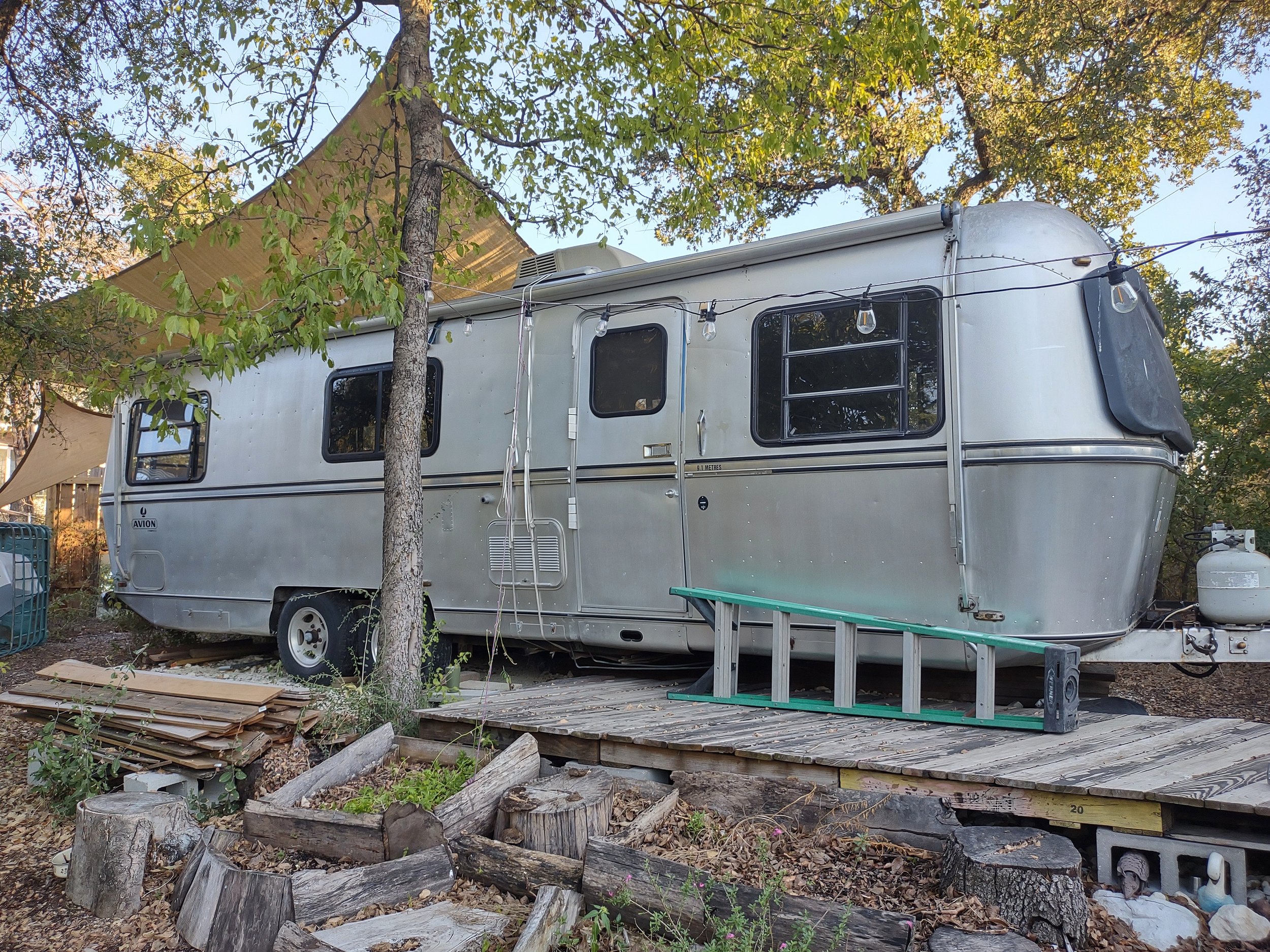
Dew Things is a tool and native seed library for FREE public use. We will resume operations once the renovation of this trailer is complete. Your support will fund the build-out, operational/ administrative costs, a native plant nursery and free workshops on a variety of skills—blending art with stewardship to the land, it’s people, wildlife and natural resources.
Our Library originally began as a grassroots operation from the home of our Founder and Director. The purchase of this mobile unit has allowed operations to easily move as necessary to support various creative communities around Austin. Our next era of support will be with an artist’s collective in south Austin on Onion Creek.
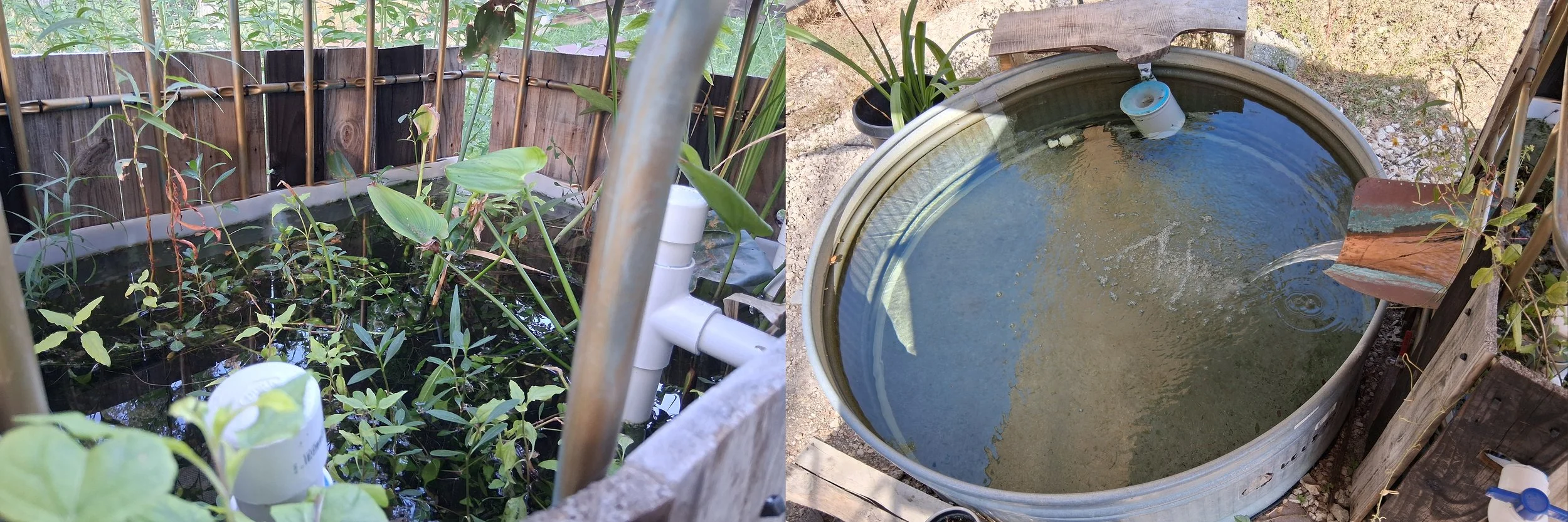
The Living Pool is a living sculpture, native wetland garden, and clean water reservoir. It is also a creative response to the chemically treated Cowboy Pool sold during the Dry Ages of data centers and water shortages. Our pool’s water is cleaned by Texas native, wetland plants & naturally occurring microbes using a stupidly-simple bog filtration system. The materials are primarily salvaged and repurposed for good. The Living Pool is alive, simple to maintain, and a huge benefit to local wildlife during perpetual Texas drought. We offer a workshop teaching the community how to creatively make and maintain their own. Stay tuned for upcoming dates!
Let’s not forget WATER IS LIFE. This pool will inspire you to write an epoch in the style of a Dr. Bronner’s soap bottle—spiritualized and incomprehensible.
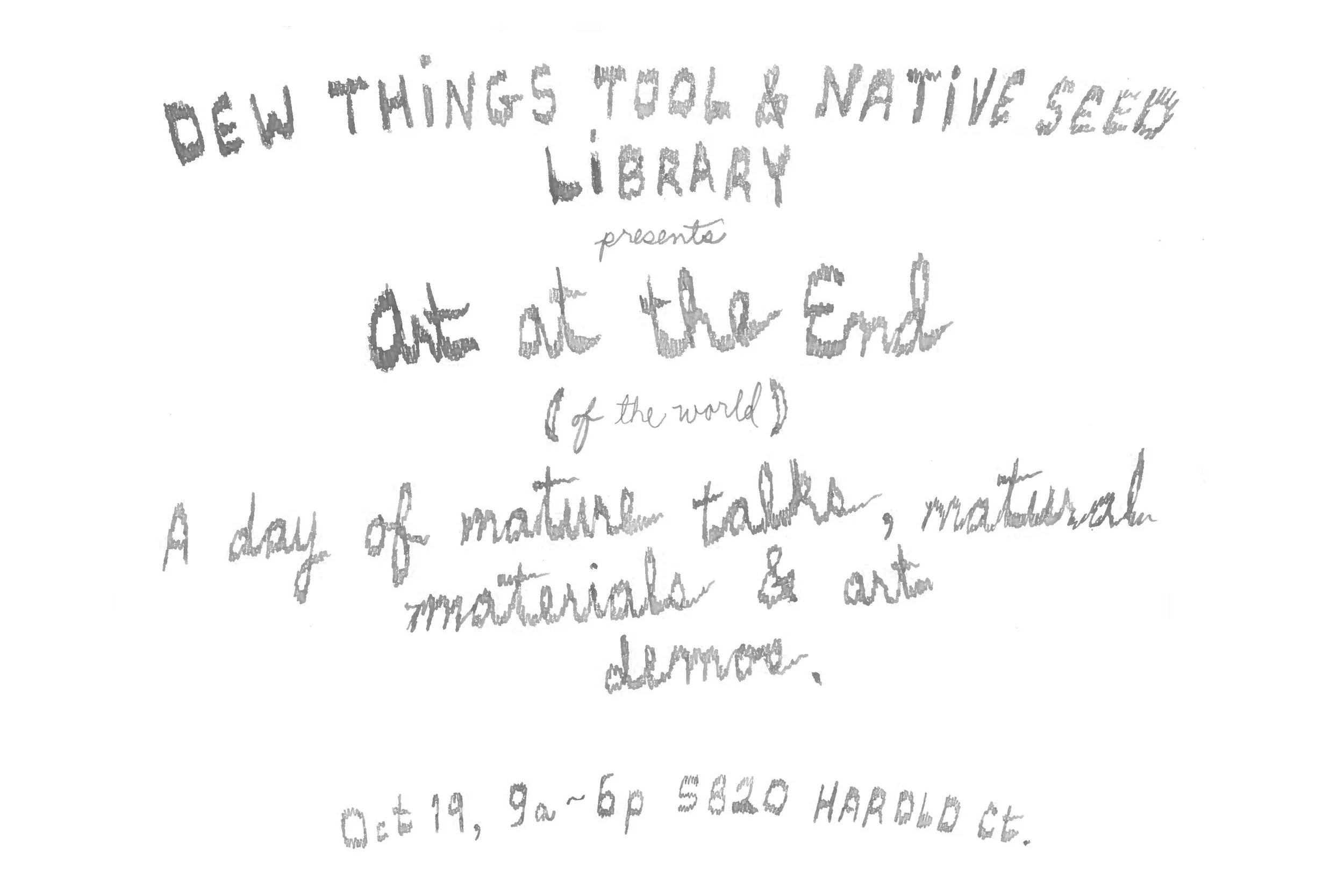
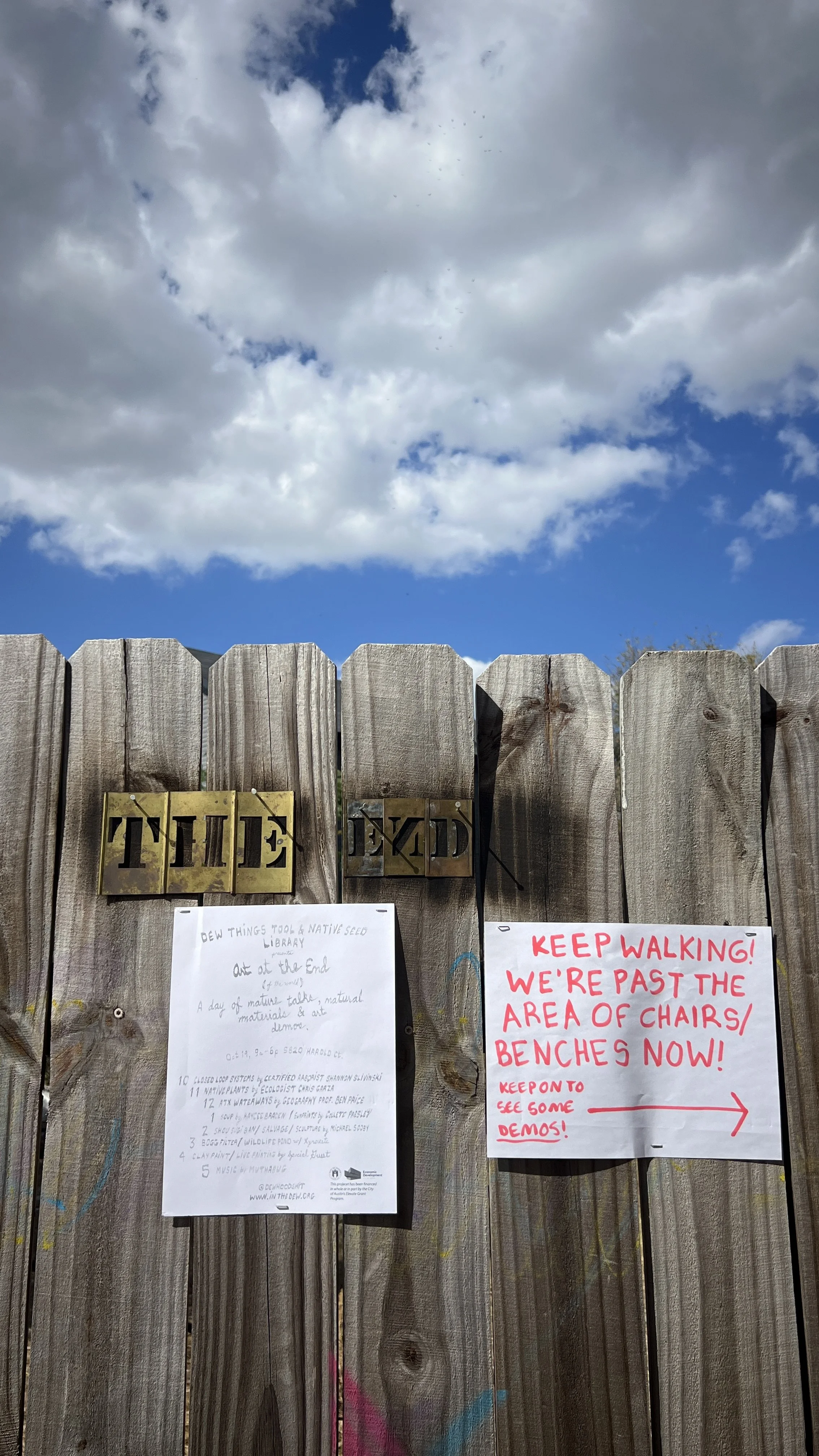
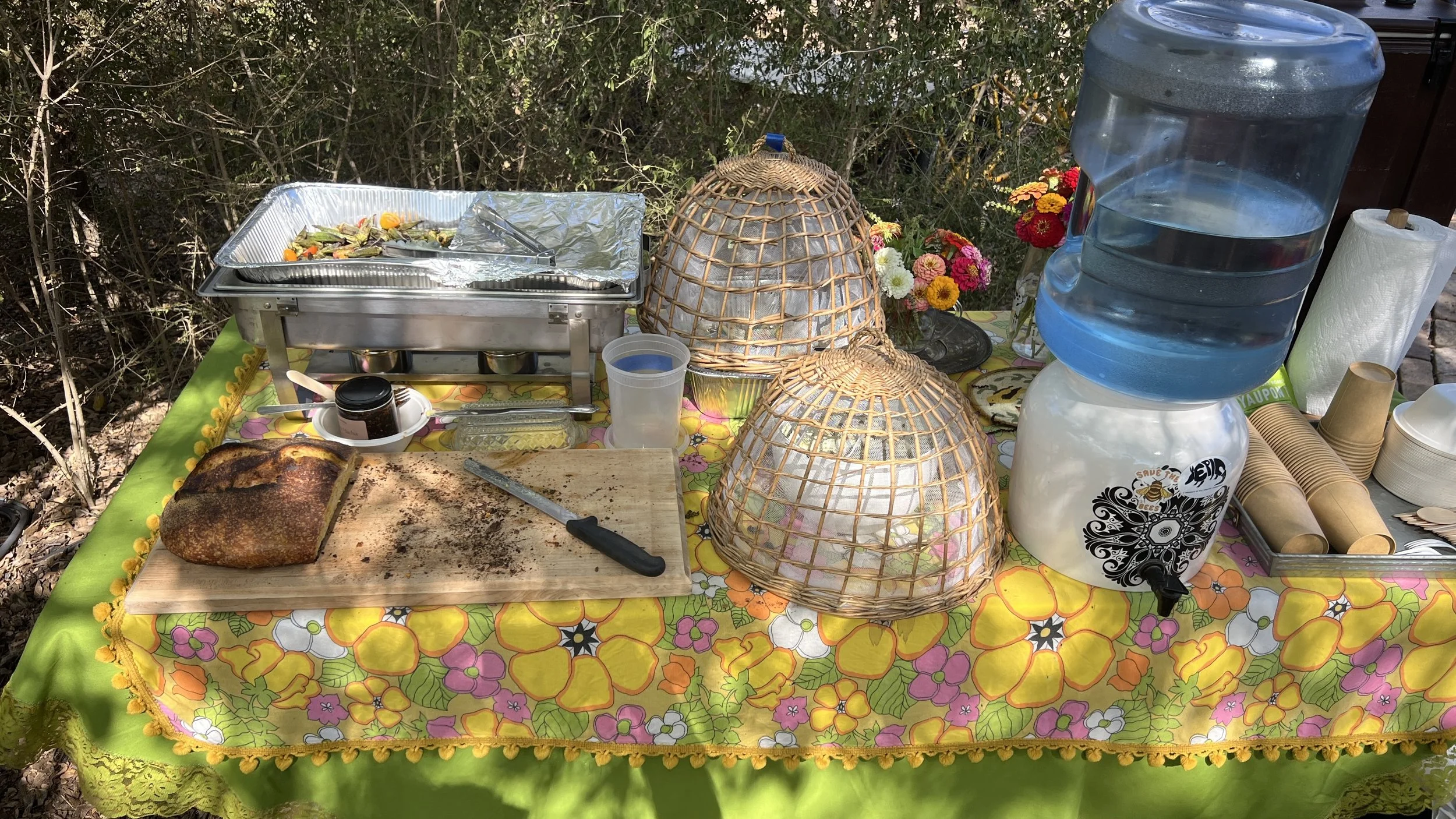
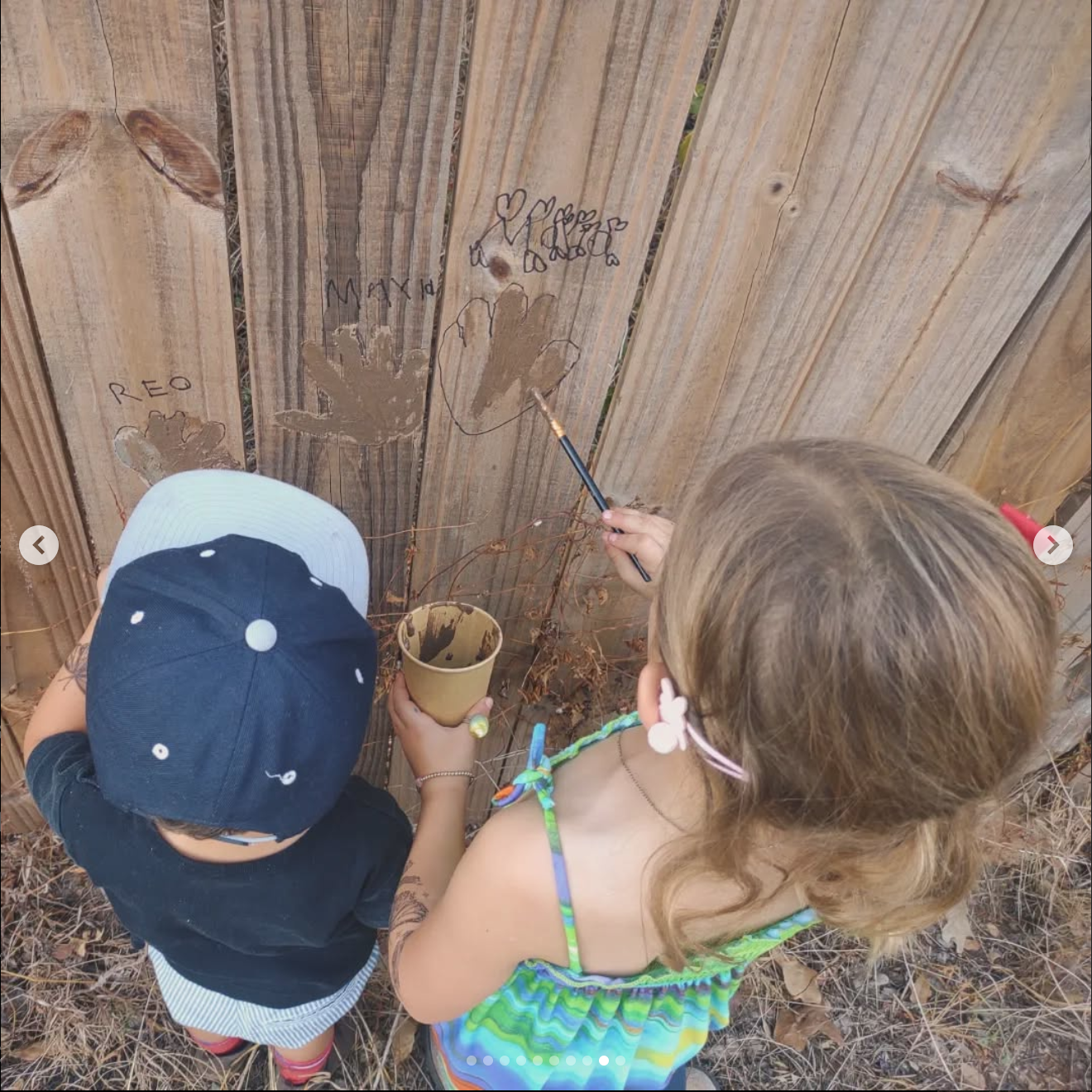
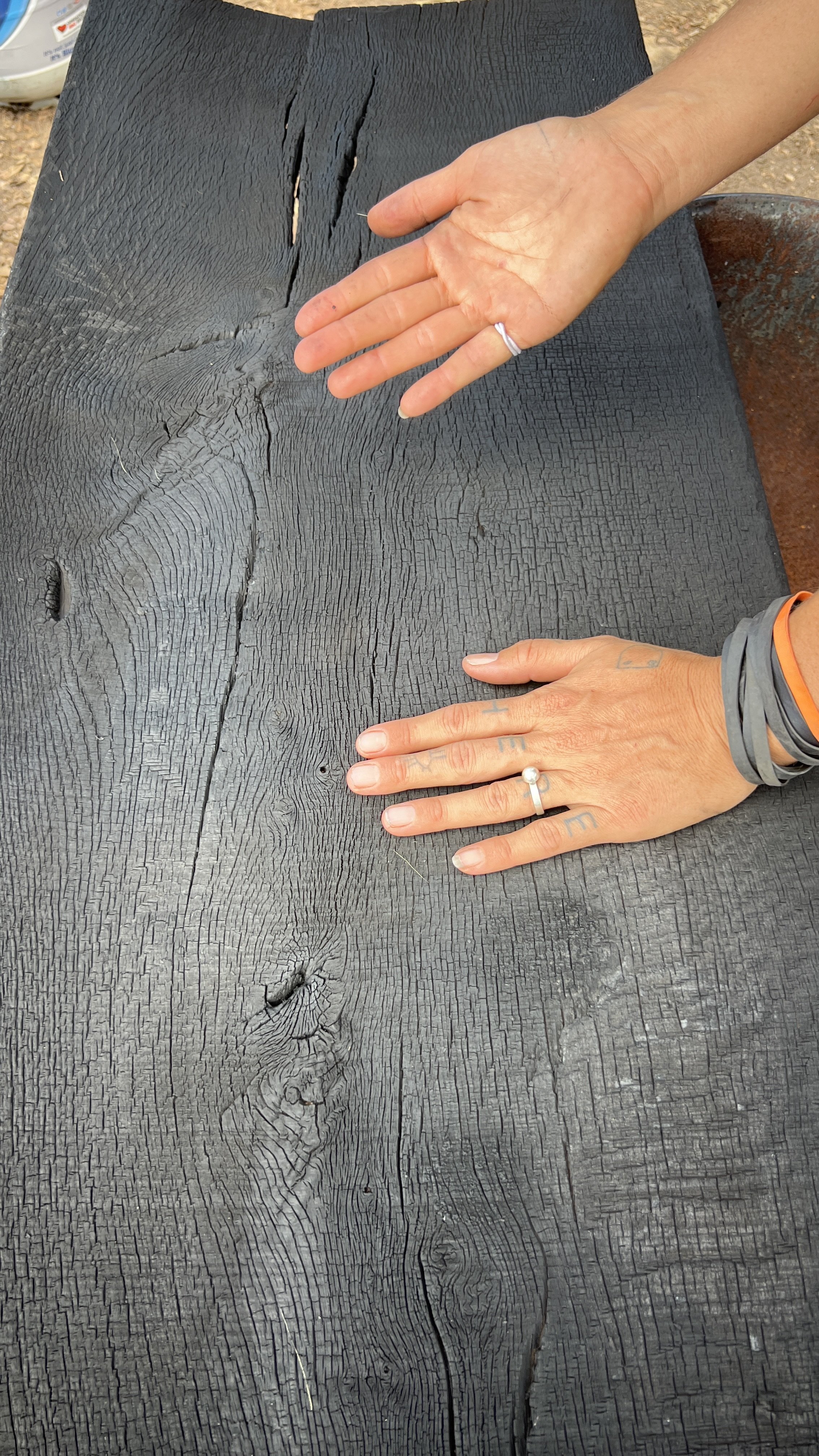
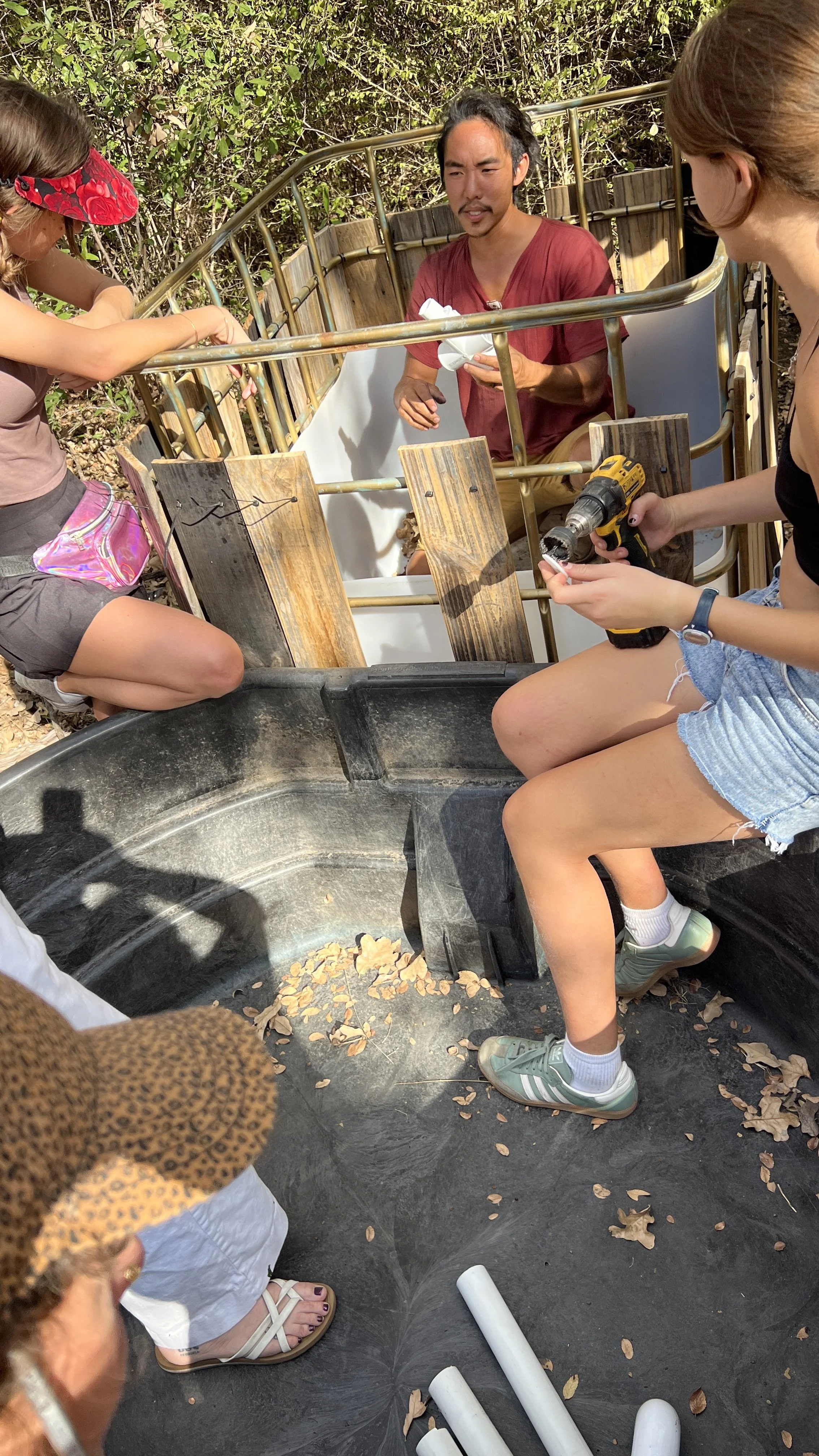
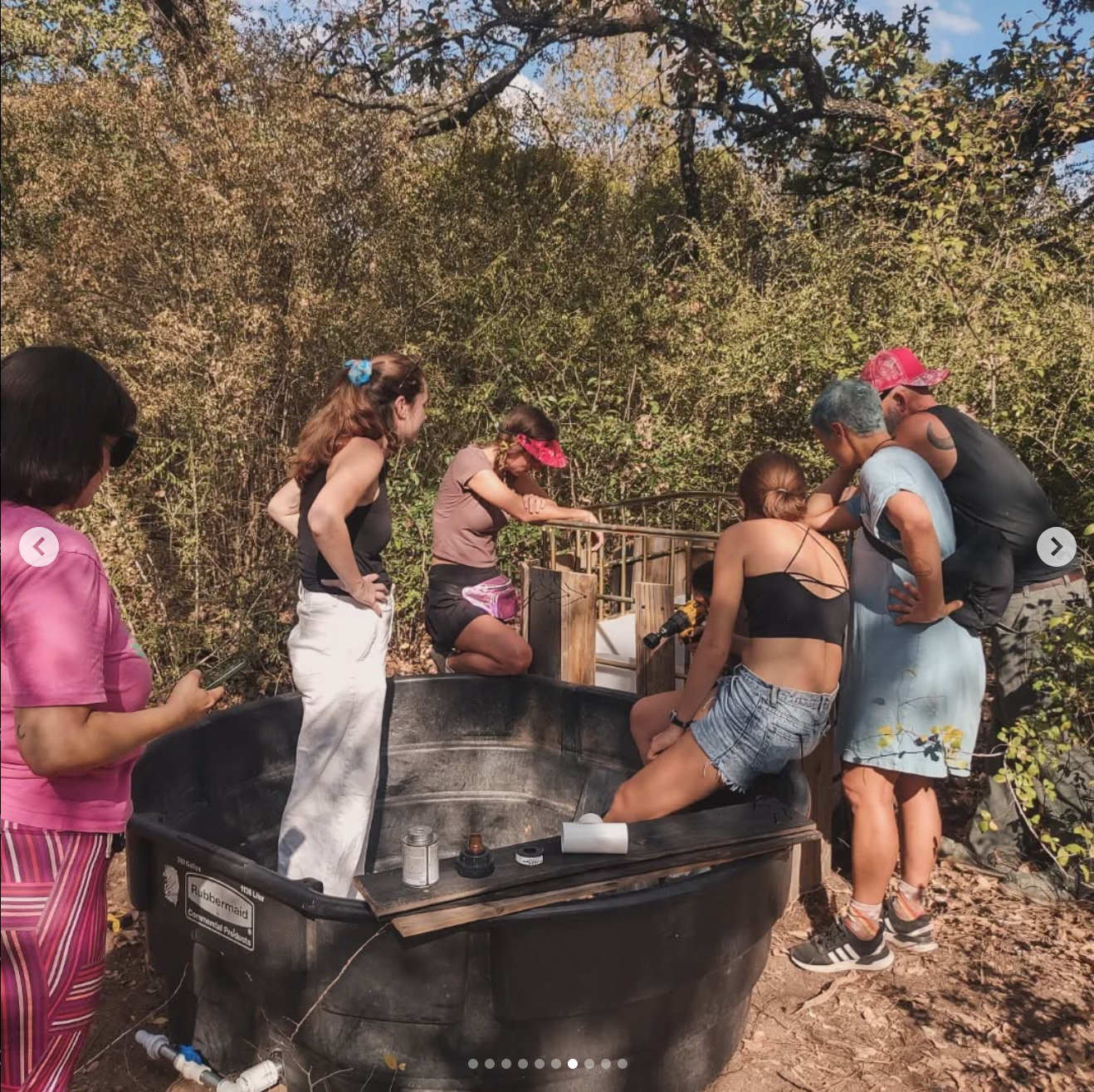
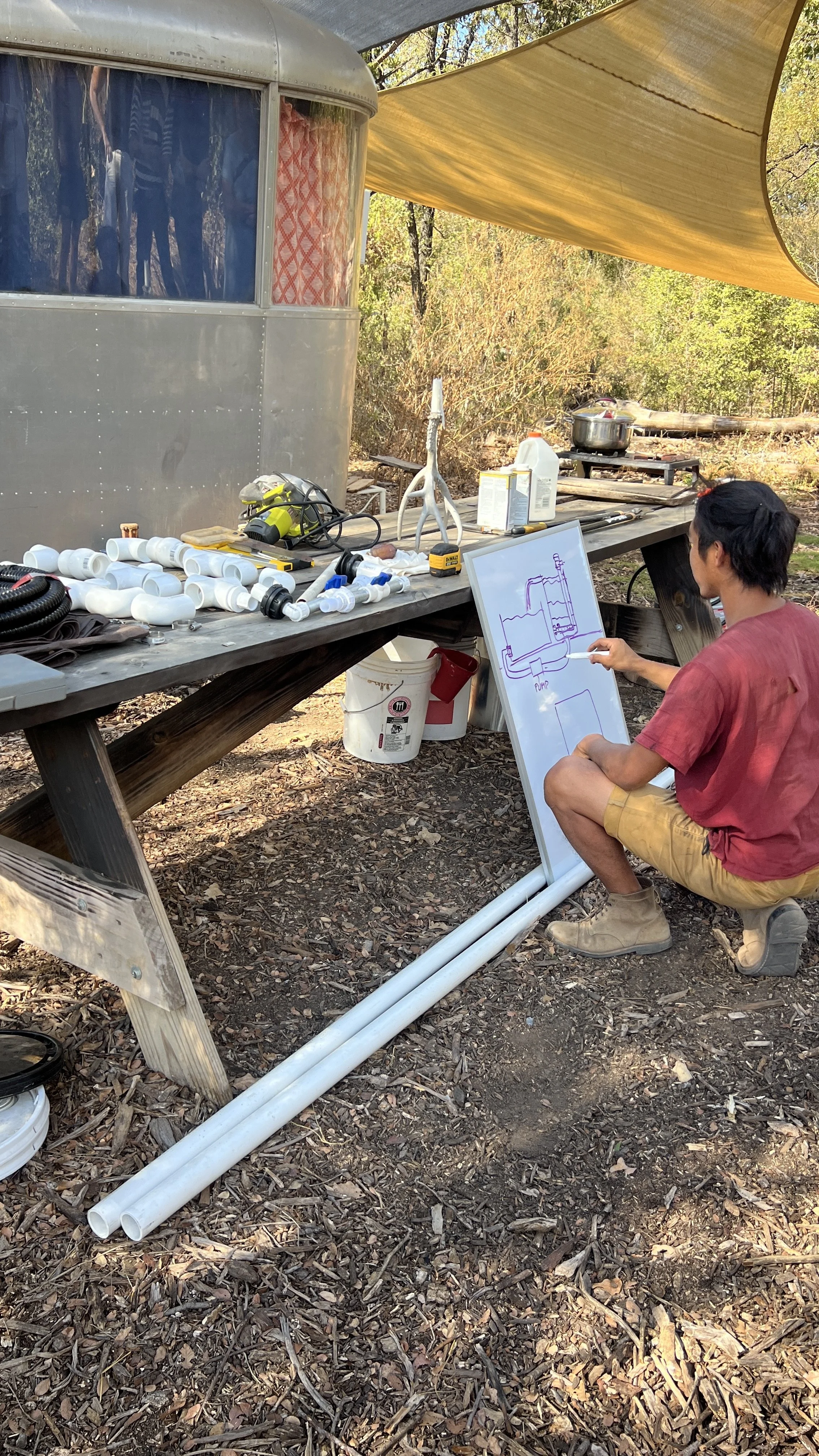
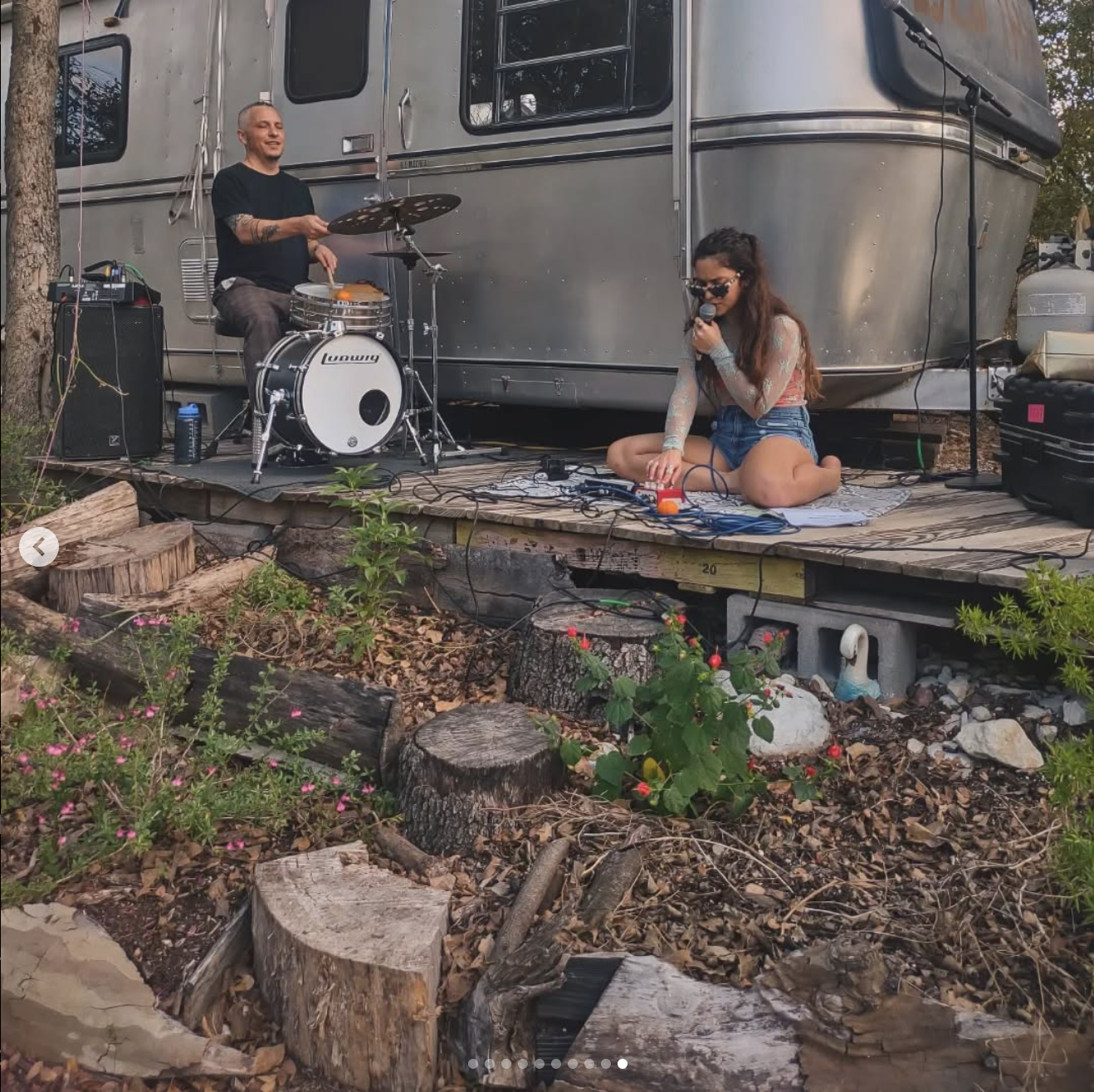
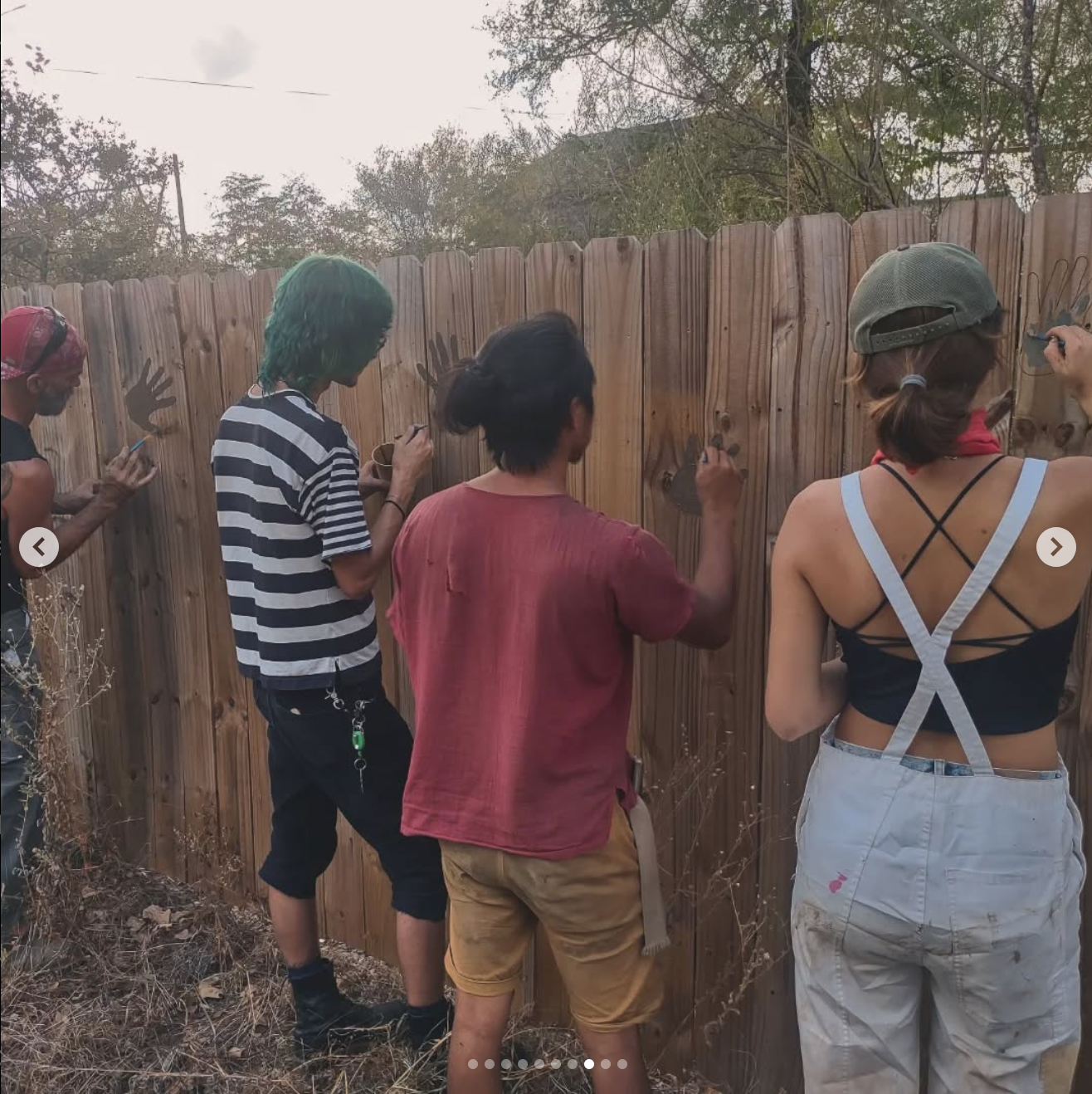
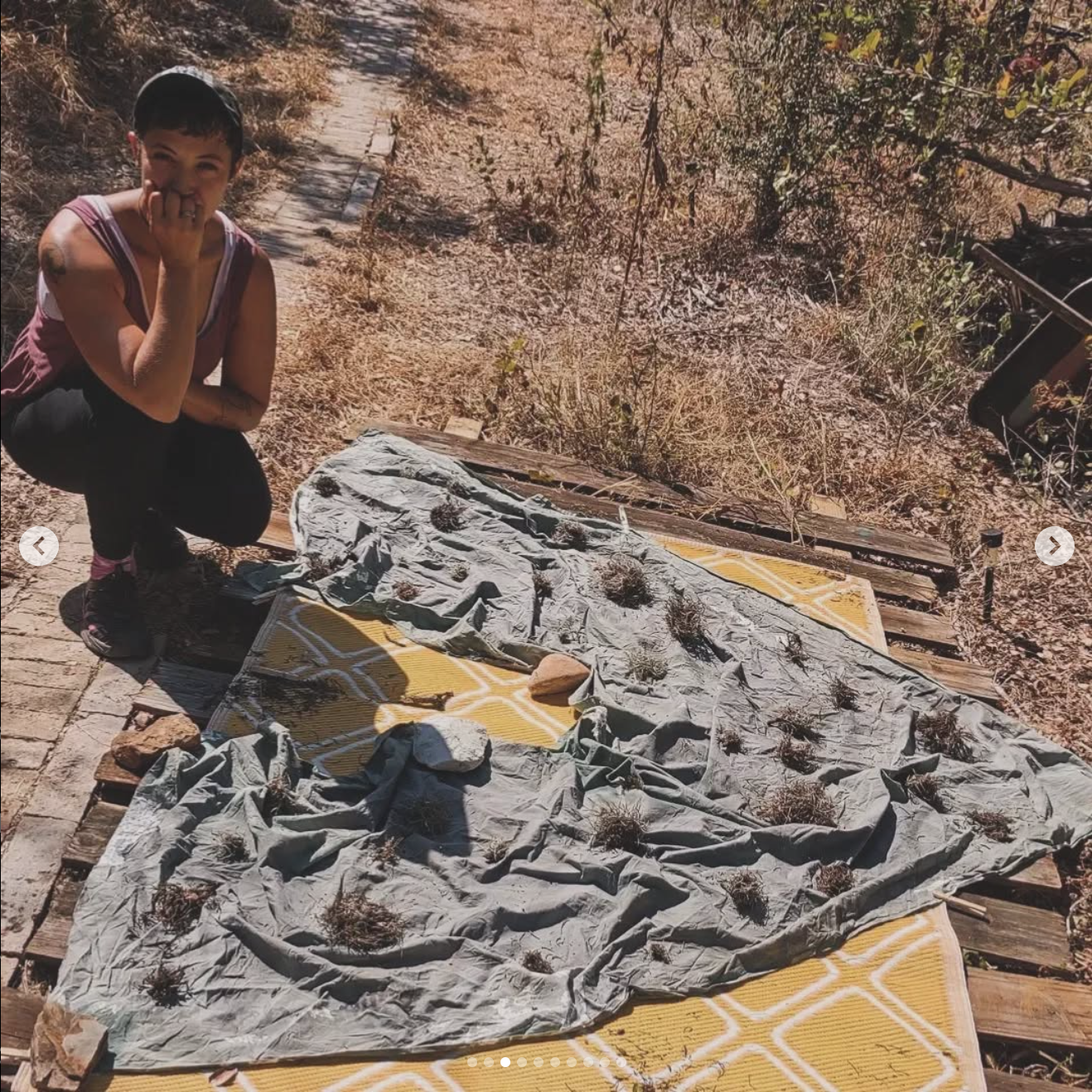
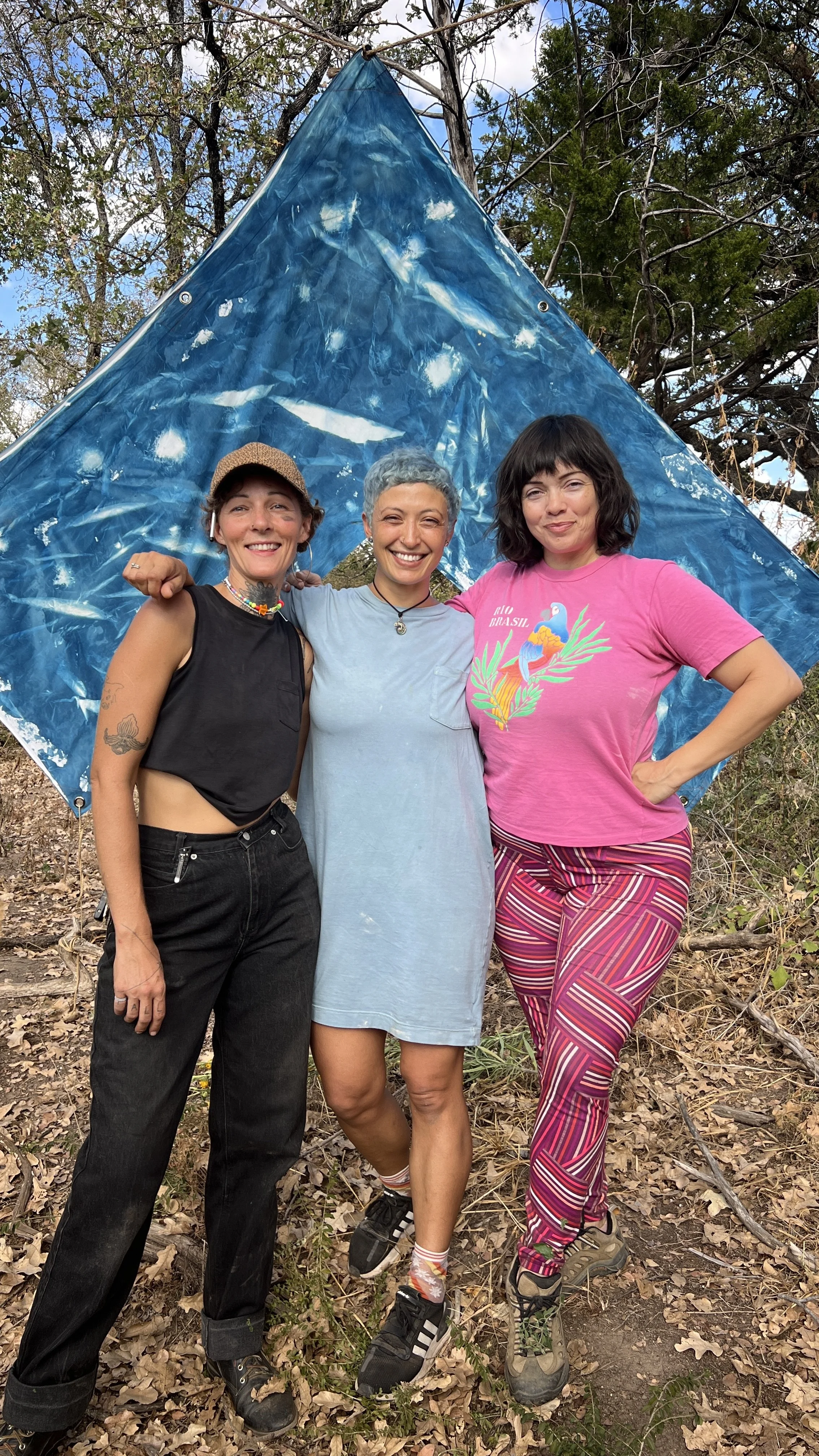
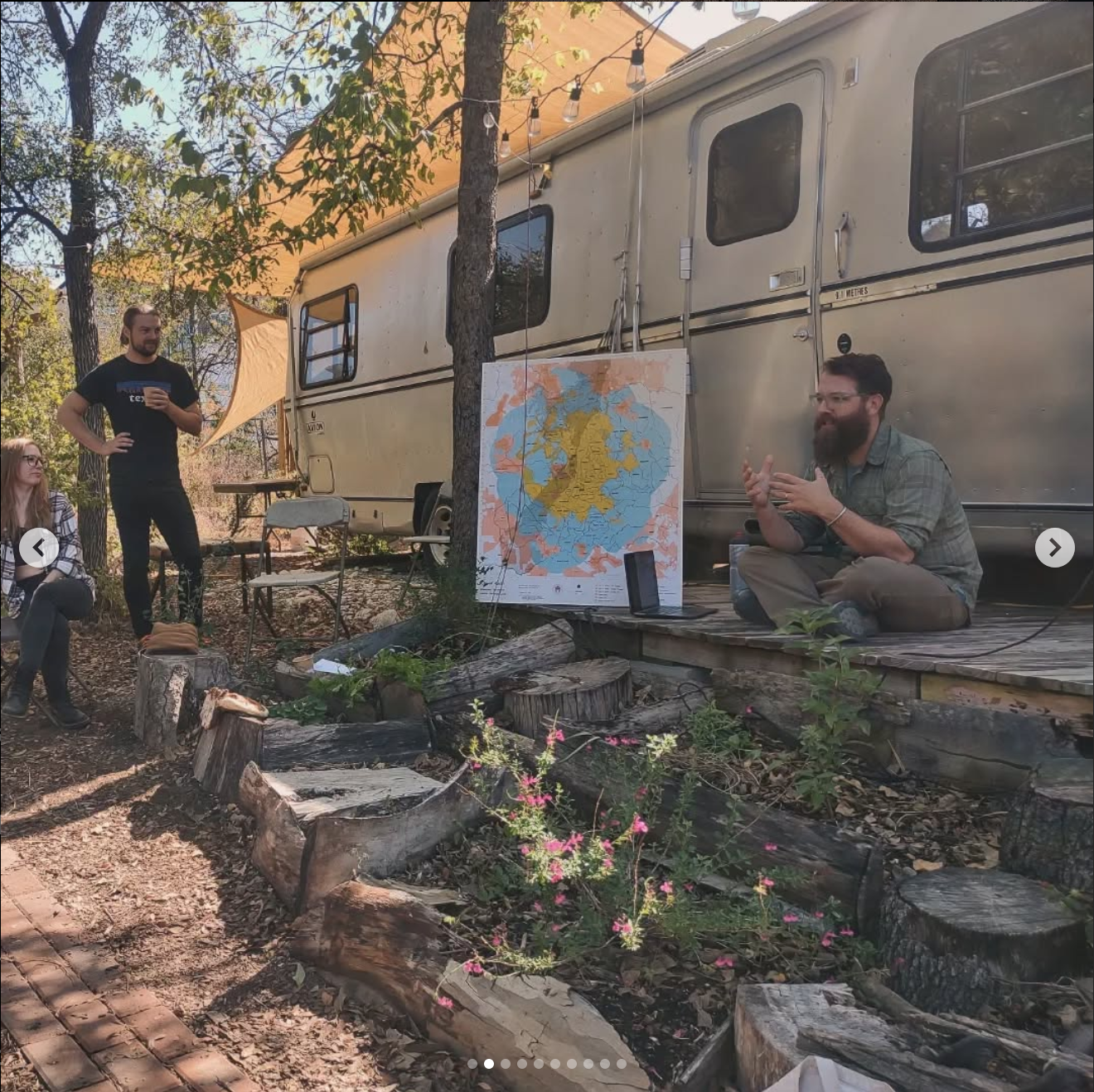
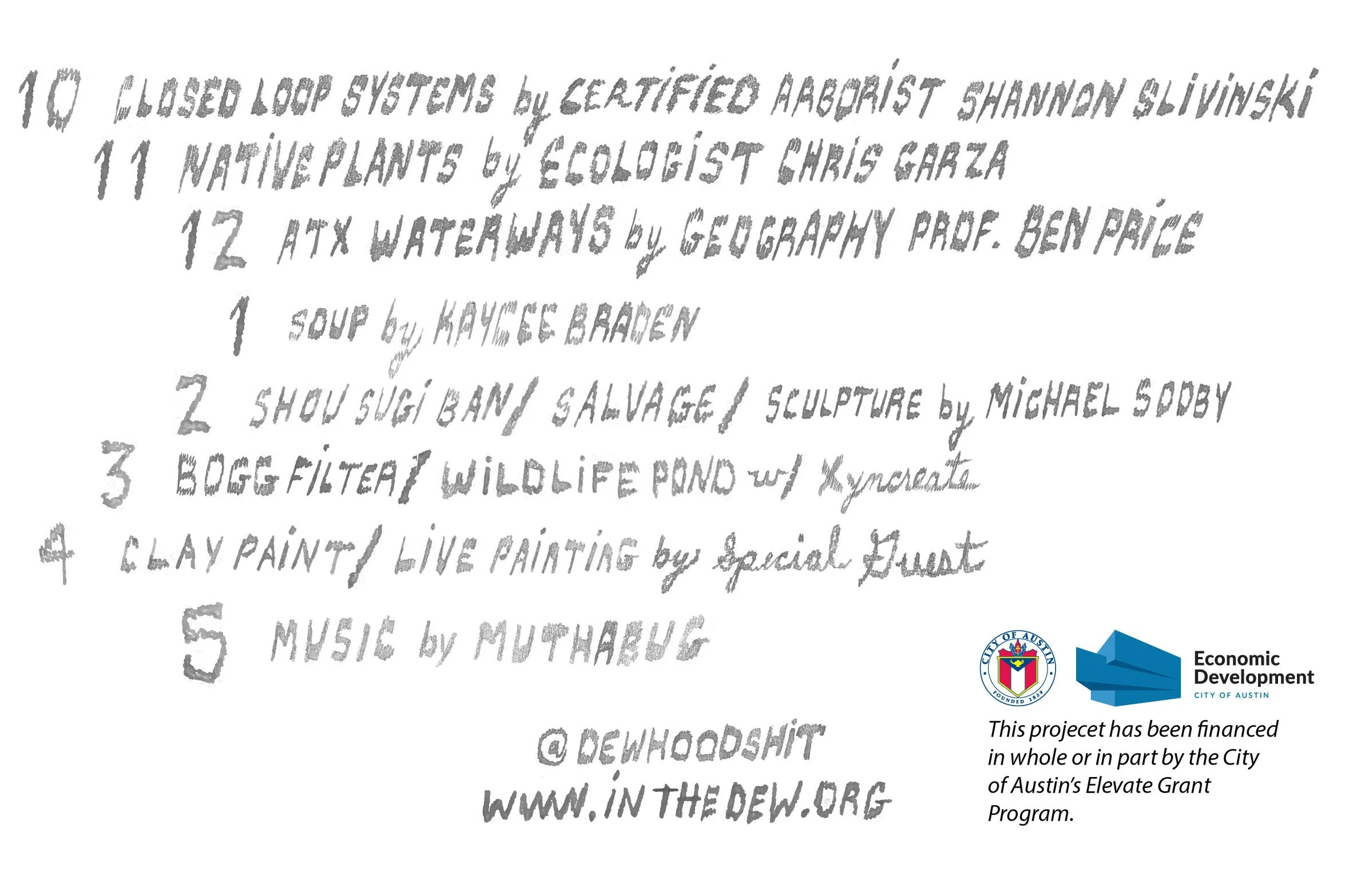
Art at the End of The World was a full day of art, natural material demos, and nature talks. Photographer and printmaker, Colette Presley made several large banner, cloth prints of native plants. Michael Scoby produced an array of shou-sugi-ban sculptures made from salvaged and found materials. Vocalist Noa Belliti and drummer Michael Longoria, of Muthabug, provided tunes; Muthabug’s music pays homage to our relationship with nature, among other things. Xyncreate Collective demonstrated a DIY bog-filtered wildlife pool and Zwi Meza lead a clay-paint demonstration. Professor of Geography, Ben Price lectured on the Austin’s watershed and its ecological significance, effect and impact on wildlife and natural resources/ materials. Ecologist Chris Garza led a tour on native plants at our land restoration project. Certified COA Arborist Shannon Slivinski lectured on closed-loop/ zero-waste systems in nature. And finally, sustenance was inclusive to the day-long creative experience by cook, sustainable agriculturist, and herbalist Kaycee Braden. Ingredients were all sourced locally by Simple Promise Farms of Ranch House Recovery.

Street hospitality as an act of poetry. Lemon tea is served on the streets—as the kettle whistles, the passerby stops to inquire about its sound, and is offered tea. We stage this deconstructed ceremony as a weekly jester of bringing and sharing water (life). Art can be an idea and doesn’t have to be owned, but shared. We encourage you to do the same in your hometown. Make it your own, do it often.

If you need to clock community service hours or simply enjoy being outside, invasive plant removal is a powerful fix. We remove invasive plants as often as possible. Be in contact if your naughty, unlawful behavior requires you to volunteer with a legitimate organization. We dew things that municipalities dew not. Art is very simply expression and can take the form of any act. Make sure you photograph it tho, or it didn’t happen. (sarcasm)
Removing invasive plants support local ecologies, native seed banks, and your survival. Life is all around, you have a responsibility to nurture life just as life nurtures yours. Get your head out of your ass. Dew Things has been inspired by people like Mierle Laderman Ukeles—a maintainence artist and former artist-in-residence at the New York City of Dept. of Sanitation—whose service-oriented artwork was recognized by the National Gallery of Art.
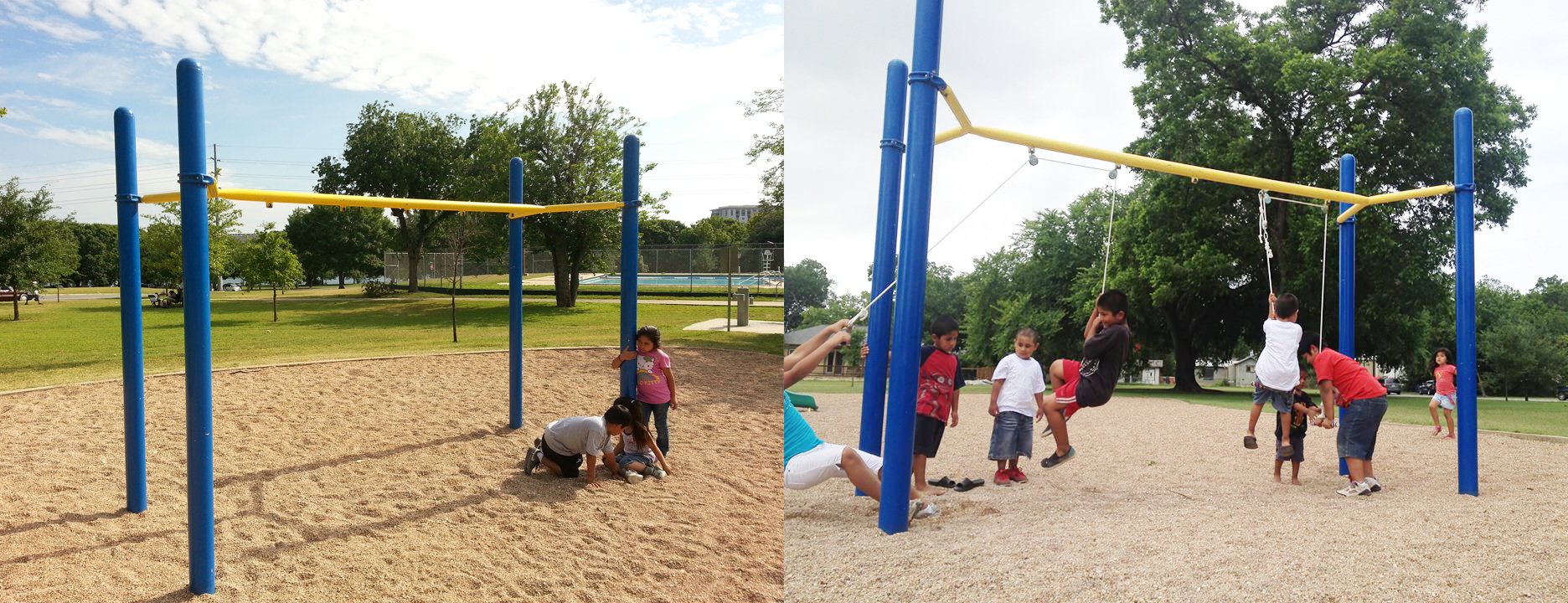
A pulley system installed at an unmaintained inner city playground. We dew things that municipalities dew not.
Dew Things can be understood in the context of artists like Mierle Laderman Ukeles—a maintainence artist and former artist-in-residence at the New York City of Dept. of Sanitation—whose service-oriented artwork was recognized by the National Gallery of Art. Stewardship is art.

“Put in jail the animals who are poor.” A 3-hour street performance—symbolic of the 3-years a ITDOLT volunteer spent in jail. His family was too poor to post bail. The title was borrowed from a child’s retelling of Winnie The Pooh in this video.
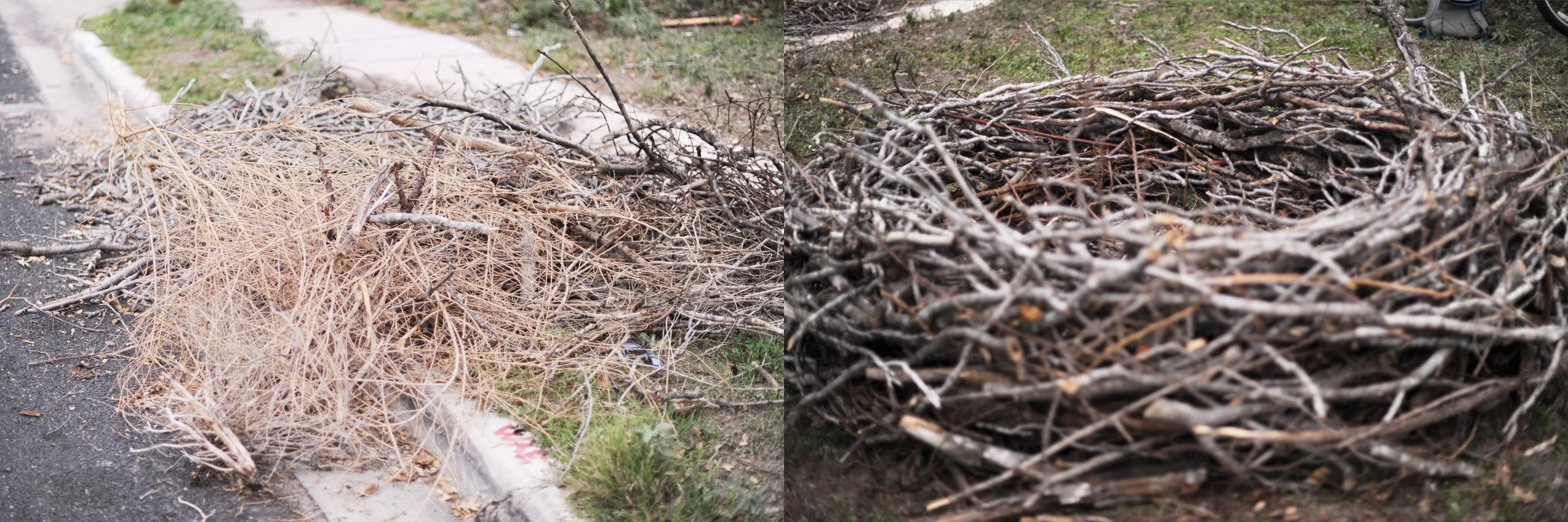
Making art shouldn’t fuck-up the environment or the person(s) making it. On brush collection days, ITDOLT is known to rearrange brush piles to make curbside sculptures. Make art, not trash! Keep your eyes peeled for these in ATX.
“Art lives on the streets, dies in the gallery and is buried in the museum”. -Unknown
Artist made fire pits—repurposed from recycled barrels—and firewood is delivered to street encampments during freezing temperatures.
We dew things that municipalities dew not.
Dew Things can be understood in the context of artists like Mierle Laderman Ukeles—a maintainence artist and former artist-in-residence at the New York City of Dept. of Sanitation—whose service-oriented artwork is recognized by the National Gallery of Art. Stewardship is art.

This native plant trellis was made where a giant trash pile was removed. Art and land stewardship in a nutshell.

The Field Sink is sourced to houseless communities as a simple and cheap form of preventative medicine for public health. We dew things that municipalities dew not.

Shitty Flowers
Shitty Flowers is a composting project using fecal matter (resource) to grow bio-installations of flowers and other plants. Social collapse is the wave of the future and fecal matter will be managed by the humans who make it.
Working with folks living on the street, ITDOLT is providing composting receptacles to increase public health. We want to get a jumpstart on the future and teach others how it’s done.
Artist Zwi Meza is illustrating a How-to-Humanure pamphlet explaining composting systems.

StReet Hospitality
ITDOLT provides street hospitality services to the unhoused—like, fire extinguishers for encampment kitchens, over-the-counter antibiotic ointment, hot meals and drinking water, tents, etc.

Lawndry
Lawndry is a laundry-to-lawn citizen service project and DIY workshop teaching you how to create an outdoor, bicycle-powered laundry facility for free, public use. You will learn how to create and manage a simple gray-water system that runs into a mulch bed and a state-of-the-art clothesline will function as the drying facilities.
ITDOLT will walk you thru the process and review the city of Austin’s requirements to help make it happen.

Frugality Forever
Frugality Forever is a on-going lecture series and public discussion about living frugally, the superstition of the 40-hour work week, and a lesson in consensus decision making, designed to help low-to-no income communities thrive with less and learn strategies in shared leadership, resource management and getting shit done, together.